

We haven’t posted an update about our beloved Haiti in a while, as there hasn’t been any new information to share. We had hoped that by now we would have good news to share, but sadly, we do not.
Our factory remains closed as it is still not safe for our people to travel to work each day. What started as a temporary 30 day closure has now turned into being shut down for over 6 months.
We are in regular communication with our General Manager in Haiti and we are anxiously awaiting the day that it is safe to re-open so that our team can get back to work.
If you are a praying person, we would love it if you would join us in continuing to pray for the people of Haiti and for peace to return to the country. We are praying for the day we can resume cutting & sewing at our factory in Haiti.
We remain committed to our team and to providing fair wage jobs in Haiti.
Until we can resume our operations in Haiti we are continuing to produce goods at factories in the United States and Dominican Republic that are committed to upholding our high standards of ethics and quality.
Thank you for your patience as we navigate inventory issues.
Thank you for supporting fair trade jobs.
Thank you for supporting our team in Haiti.
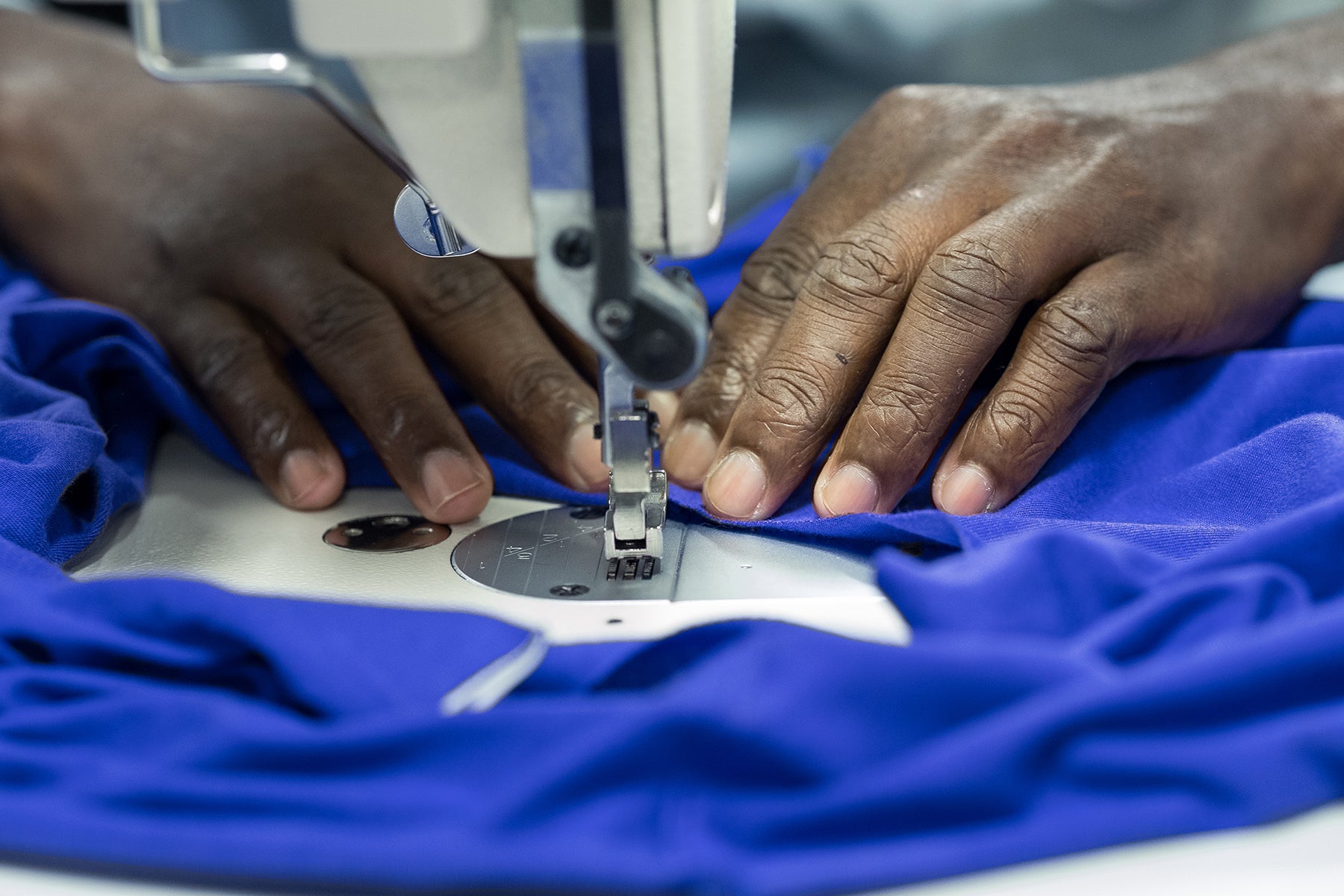
Where Things Currently Stand In Haiti
Related Posts

Trend Snapshot: Texture Party
When it comes to custom apparel, the type of decoration is often what takes a garment from simple to standout. As customers continue to look for products that feel more elevated, tactile, and unique, dimensional decoration techniques are having a major moment. From textured stitching to vintage-inspired patches and eye-catching embellishments, these techniques add depth and personality to custom apparel while creating a more premium, collectible feel. Here are five decoration trends to watch. Embroidery (Images courtesy of Pinterest, Love Olive Co., and Zara) Embroidery continues to be a go-to decoration technique, but today’s applications go well beyond the traditional logo. Detailed artwork, oversized designs, tonal stitching, and dimensional elements are giving embroidery a fresh, fashion-forward feel. The tactile quality of stitched artwork adds dimension to even the simplest garment, making it especially effective for logos, collegiate-inspired graphics, outdoor designs, and premium branded apparel. Trend tip: Try oversized embroidery or a tonal design for a more elevated take on this classic technique. Felt & Chenille Appliqué (Images Courtesy of Urban Outfitters and Anthropologie) Felt and chenille appliqué are bringing varsity-inspired texture back into the spotlight. With their bold shapes, tactile surfaces, and nostalgic connection to collegiate and athletic apparel, these techniques give custom graphics a substantial, premium feel. Chenille offers a particularly plush, dimensional texture, while felt creates a cleaner, graphic look. Both can be used for lettering, numbers, icons, and larger graphic elements; and they work especially well when layered with embroidery or other decoration techniques. Trend tip: Lean into collegiate-inspired typography, oversized lettering, and vintage athletic graphics for a classic look with a current feel. Rhinestones (Images Courtesy of Guess, Nike, and Pinterest) Rhinestones are getting a modern makeover. Rather than being reserved for overly embellished designs, rhinestones are being used selectively to add sparkle, dimension, and unexpected detail to apparel. Small amounts of rhinestones can highlight specific elements of a graphic, while larger applications can become the focal point of the design. They pair especially well with fashion-forward typography, western-inspired graphics, and nostalgic Y2K aesthetics. Trend tip: Use rhinestones as an accent rather than covering the entire design. A strategically placed sparkle can make a graphic feel more elevated without overwhelming it. Patches (Images Courtesy of Anthropologie, Golden Goose, and Zara) Patches are one of the most versatile ways to add dimension and personality to custom apparel. From embroidered patches to woven and printed options, they give designs a tactile, collectible quality that feels particularly relevant to today’s vintage and workwear-inspired trends. Patches can also create opportunities for more intricate artwork, allowing a design to feel like a piece of memorabilia rather than simply a printed graphic. They’re a natural fit for outdoor brands, clubs, events, teams, and lifestyle collections. Trend tip: Consider layering multiple patches or combining patches with embroidery and print to create a more dimensional, curated look. Puff Print (Images Courtesy of Pinterest, Shore Society, and Alan Jones) Puff print is bringing dimension to screen printing. By expanding during the curing process, puff ink creates a raised, tactile surface that transforms traditional printed artwork into something you can see and feel. It’s especially effective for bold typography, simple graphics, and vintage-inspired designs where texture is part of the aesthetic. Puff can also be used selectively within a larger design to create contrast between raised and traditional printed elements. Trend tip: Use puff on key elements of a graphic—like lettering or a small icon—to create dimension without sacrificing the overall clarity of the design. Add Dimension to Your Next Custom Design Texture is becoming an increasingly important part of the custom apparel experience. Whether it’s the tactile quality of embroidery, the nostalgia of chenille, the sparkle of rhinestones, the collectible feel of a patch, or the dimensional impact of puff print, these techniques can help a garment feel more distinctive and valuable. Ready to bring your next idea to life? Reach out to your sales rep to explore these decoration techniques and start the customization process or click the button below to Get a Quote. Get a Quote Today
Learn more
Inside the GOEX Factory: A Live Look at Haiti and Kansas City
GOEX President Jessica Ray hosted a live Zoom call connecting our Kansas City warehouse with our factory floor in Port-au-Prince, Haiti. Ariane Manual, General Manager of GOEX Haiti, and Shelby Williams, Operations Director in Kansas City, walked supporters through what it actually looks like to make and move a GOEX order, cutting table to checkout.
Learn more
Say No To Fast Fashion
Why Should We Say No to Fast Fashion? According to the World Bank as of 2025, 1 in 10 people globally are living in extreme poverty at just $3.00/day. Researchers across organizations have agreed that less than 2% of workers in the global fashion industry earn a livable wage, most earn less than $2 per day putting them in extreme poverty. Estimates of global garment workers vary from 100 million to 300 million depending on if you count the entire supply chain or just those in garment factories. Whichever number you choose, apparel is a major contributor to poverty even though the employees typically work long hours 6-7 days per week. This is not a work ethic problem or even a lack of job opportunities problem – this is a value proposition problem. Consumers do not perceive clothing to have the same value as other items. Inflation statistics are very telling – while the average CPI in the US rose 24% from 2020 to 2025, apparel prices rose only 11%. This is driven largely by fast fashion which keeps prices low by sacrificing quality of fabrics and fit, creating garments only meant to be worn a couple of times and then discarded. Prices may seem low but the cost per wear is increasing rapidly. Fast fashion has significant adverse effects on the environment, labor conditions, and consumer behavior. Here are a few of those effects. 1. Environmental Degradation Water Pollution and Waste: The fast fashion industry is responsible for 20% of global wastewater – the second-largest water polluter globally – due to dyeing and textile treatment processes. Factories often discharge untreated water filled with toxic chemicals into rivers and oceans, particularly in developing countries like Bangladesh and India. Carbon Emissions: Fast fashion contributes to 10% of global carbon emissions —more than aviation and maritime shipping combined. This is exacerbated by the use of synthetic fabrics derived from fossil fuels, which are energy-intensive to produce and non-biodegradable. Add shipping to that and the total is even more shocking. 2. Textile Waste Landfill Overflow: Approximately 85% of all textiles are discarded each year, with most ending up in landfills or being incinerated. Globally, consumers generate 92 million tons of textile waste annually, a figure projected to rise to 134 million tons by 2030 (UNEP, 2025). Microfiber Pollution: Washing synthetic garments releases 500,000 tons of microfibers into the ocean annually–equivalent to dumping 50 billion plastic bottles into the sea. 3. Exploitative Labor Practices Low Wages and Unsafe Conditions: Less than 2% of garment workers globally earn a livable wage. Many work up to 16 hours a day in unsafe environments for as little as $2 per day, particularly in countries like Bangladesh and Vietnam. Child Labor and Forced Labor: The industry employs millions of children in low-skill roles, often under coercive conditions. Forced labor is also prevalent, with workers subjected to wage theft, gender-based violence, and hazardous chemical exposure. False Claims Related to the Above: Brands like Shein and Temu are masters at hiding their labor practices. They contract factories to produce who contract all of their labor paying them by the piece. The brand can then claim people make decent wages but don’t unpack that they earn those higher wages only by working 10-12 hours per day 7 days per week. 4. Consumerism and Psychological Impact Throwaway Culture: Fast fashion promotes a “disposable” mindset by encouraging frequent purchases of low-quality garments that are quickly discarded. This cycle fosters overconsumption while diminishing the perceived value of clothing. Social Pressure: The industry leverages influencer culture and social media to create an insatiable demand for new trends, leading consumers to feel dissatisfied with their existing wardrobe. These impacts highlight the urgent need for sustainable alternatives such as slow fashion, which prioritizes ethical labor practices and environmentally friendly materials. So how is GOEX setting an example in the apparel industry of how to do things differently? Our fabrics are made in the USA and our garments are sewn in our production facility in Haiti. This means higher environmental standards than found in developing nations and a low carbon footprint from very short shipping lanes.All of the polyester used in our garments is either recycled or made with Ciclo® technology. Ciclo® polyester biodegrades like cotton in ocean water or a landfill meaning harmful microplastics do not live forever in ocean water or soil like with conventional or even recycled fibers. In our production facility in Haiti, our work week does not exceed 48 hours and any overtime work is consensual without exceeding 60 hours. We also believe that our workers have a right to compensation for a regular work week and we exceed the minimum wage while also complying with all legal requirements on wages, and provide any fringe benefits required by law. You can learn more about our code of conduct here. Protecting and empowering people throughout our supply chain is our top priority. Every supplier we partner with shares our values in caring for people and planet. We want you to be absolutely confident in these claims. To that end, we also opted into an additional customs review on each import checking that our supply chain is free of risk for human trafficking or child labor. We use quality fabrics and produce quality garments. We actually want you to wear your garments over and over again and use high quality, made in America fabrics to ensure it will look great wash after wash. Ready to join the movement? Open a Wholesale Account today to get your order started.
Learn more